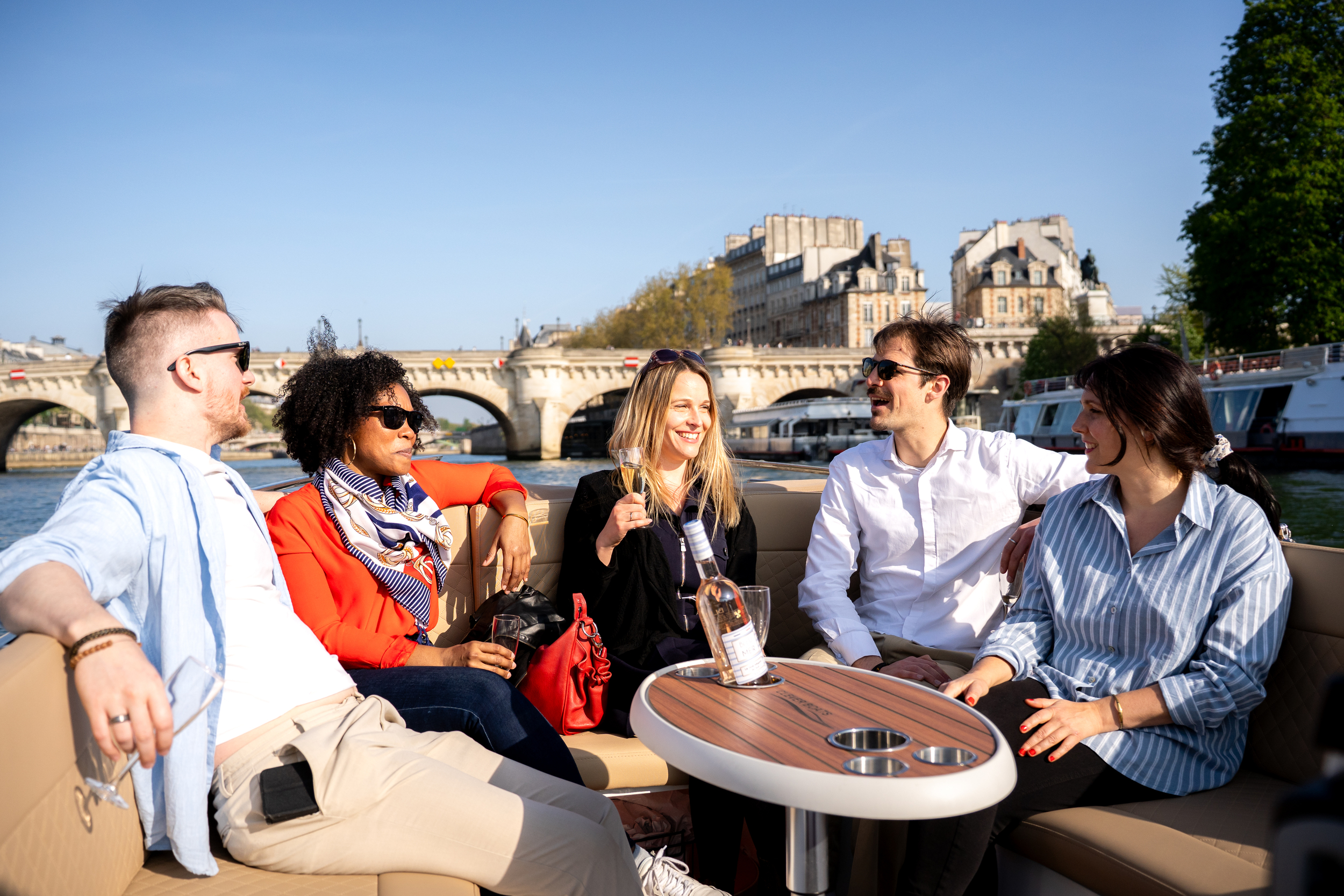
Paris was born on the water. Before the grand boulevards and sweeping avenues existed, the Seine served as the vital center of the city. Today, its waters offer a serene pathway through the middle of the modern metropolis. Walking along the riverbanks provides lovely views, yet stepping gently onto a boat and traveling directly upon the current alters your entire perspective. Sights that often feel overwhelming on land transform into graceful cinematic vignettes when observed from the river. As you travel through the center of the city, the banks unfold like a vast historical tapestry. This route functions as a natural timeline, revealing the growth of the French capital century by century. Experiencing these sights away from the crowded pavements offers an elegant, relaxed way to absorb the architectural majesty of the city.
The Île de la Cité rests in the exact middle of the river, acting as the original foundation of Paris. Ancient Romans settled here, and medieval kings later built their formidable palaces upon this very soil. Navigating around this island feels like drifting backward through time, removing the noise of modern traffic and replacing it with the quiet flow of the river.
Notre-Dame Cathedral: A Monument in Transition
For over eight centuries, Notre-Dame Cathedral has anchored the eastern edge of the island. Viewed from the water, its massive stone flanks and intricate flying buttresses display an engineering brilliance that remains impressive today. Following the tragic fire, the cathedral became a site of intense restoration, covered in intricate scaffolding that tells its own story of resilience and craftsmanship. Passing closely by the southern façade, you can appreciate the sheer scale of the rose windows and the delicate stonework of the remaining gargoyles standing watch over the city. A highly knowledgeable river guide will often share quiet anecdotes about the generations of builders who originally shaped these stones, adding a layer of deep historical context to the visual spectacle.
The Conciergerie: Royal Palace Turned Prison
Just downstream from the cathedral, the medieval towers of the Conciergerie rise sharply from the water’s edge. Originally constructed as a royal palace for the early kings of France, this imposing structure later served a far darker purpose during the French Revolution. Its thick walls housed hundreds of prisoners, most notably Queen Marie Antoinette, before they faced the guillotine. The twin towers, known as the Tour de César and the Tour d’Argent, cast long shadows over the river. Gazing at these forbidding stone structures from the safety of a comfortable deck provides a striking visual contrast between the turbulent history of the city and the peacefulness of your current journey.
Pont Neuf: The Oldest Bridge in the City
Despite translating to “New Bridge,” Pont Neuf holds the title of the oldest standing bridge across the river in the French capital. King Henry IV ordered its construction in the late sixteenth century, and it was the first bridge built without houses lining its sides. This design choice allowed pedestrians a clear view of the water, a revolutionary idea at the time. Gliding beneath its wide, stone arches reveals the beautifully sculpted mascarons—stone masks carved into the sides of the bridge, each bearing a unique, often comical expression. Passing under Pont Neuf marks the transition from the ancient medieval island toward the grandeur of the later royal eras.
If you’re interested in exploring the beauty of Paris from a unique perspective, you might also want to check out the article on the rental conditions for boats without a skipper. This resource provides valuable information for those looking to navigate the Seine and experience the city’s iconic landmarks up close. You can read more about it here: Rental Conditions for Boats Without a Skipper.
The Power and Art of the Right Bank
The right bank of the river historically served as the center of royal power, commerce, and eventually, the grandest museums in the world. The architecture here favors immense scale, symmetry, and an undeniable assertion of authority, all designed to be best appreciated from the wide vantage point of the river.
The Louvre Museum: From Fortress to Artistic Epicenter
No building commands the right bank quite like the Louvre. Its façade stretches endlessly along the water, an architectural marvel that took centuries to complete. Originally a defensive fortress built to protect the city from Viking raids, it slowly transformed into a sprawling renaissance palace, and ultimately, a museum. From the river, you witness the pure length of the Galerie du Bord de l’Eau. The golden stone glows warmly in the late afternoon light. Without the distraction of bustling street traffic, you can truly examine the intricate carvings and statues that adorn the exterior of the pavilions, visualizing the lavish royal court that once walked those halls.
Place de la Concorde and the Obelisk
As the river curves gently westward, the trees part to reveal the vast expanse of the Place de la Concorde. In the center stands the Luxor Obelisk, an ancient Egyptian monument gifted to France in the nineteenth century. With its golden cap catching the sunlight, it pierces the skyline beautifully. This square witnessed some of the most dramatic moments in French history, including the execution of King Louis XVI. Today, it serves as a stunning transition point between the Tuileries Garden and the sweeping stretch of the Champs-Élysées. Viewing it from the water affords a composed, structural appreciation of how French urban planners mastered the art of the grand vista.
Grand Palais: Glass, Steel, and Belle Époque Elegance
Further down the river, the landscape shifts toward the architectural optimism of the late nineteenth and early twentieth centuries. The Grand Palais emerges on the right bank, characterized by its immense, barrel-vaulted glass roof. Built for the Universal Exhibition of 1900, it represents the absolute pinnacle of Belle Époque design, blending classical stone facades with industrial iron and glass. When the sun hits the roof, the entire structure appears lightweight, almost floating above the heavy stone columns. From the water, the visual harmony between the Grand Palais and the highly ornate Pont Alexandre III bridge, which connects the two banks right at this spot, creates a breathtaking tableau of Parisian elegance.
The Left Bank: Intellect, Prestige, and Time
Traditionally recognized as the intellectual and bohemian half of the city, the left bank presents a slightly different architectural rhythm. The monuments here often reflect academic pursuit, political debate, and cultural preservation, standing proudly alongside the fast-moving river.
Musée d’Orsay: The Cathedral of Impressionism
Directly across the river from the Louvre sits the Musée d’Orsay. Before housing the finest collection of impressionist art in the world, this building operated as a bustling railway station. The Gare d’Orsay welcomed travelers arriving for the 1900 Universal Exhibition. From your position on the water, the building’s industrial past remains highly evident. The two massive clocks embedded in the stone façade still look out over the river, originally designed to ensure passengers never missed their departing trains. The transition from a hall of locomotives to a sanctuary for Monet, Renoir, and Van Gogh remains a fascinating topic, one often elaborated upon by a skilled river guide as you drift past its grand exterior.
The French National Assembly: A Democratic Pillar
Continuing westward, the neoclassical columns of the Palais Bourbon come into clear view. This building houses the French National Assembly, the lower house of the national parliament. Originally constructed as a palace for a royal duchess, its imposing facade was later redesigned by Napoleon to mirror the Madeleine Church situated directly across the river on the right bank, creating a perfectly symmetrical axis. The sheer scale of the columns and the dramatic pediment command respect. Approaching this center of political power on a quiet boat highlights the enduring stability of the city’s civic institutions amidst centuries of turbulent change.
Les Invalides: The Golden Dome of History
Slightly set back from the river, but unmistakably prominent, shines the golden dome of Les Invalides. King Louis XIV commissioned this vast complex as a hospital and retirement home for war veterans. Today, it houses various military museums and the monumental tomb of Napoleon Bonaparte. The dome itself was completely re-gilded with real gold leaf, requiring thousands of hours of meticulous labor. Catching a glimpse of this brilliant rooftop reflecting the sky offers a striking visual reminder of the imperial ambitions that shaped much of the Parisian skyline. The broad, grassy esplanade leading from the building down to the riverbank provides a clear, unobstructed sightline that is best appreciated from exactly the middle of the channel.
The Iron Lady: The Pinnacle of the Journey
Every journey through the center of Paris builds toward one inevitable, spectacular focal point. The landscape of the western districts gradually opens up, setting a dramatic stage for the ultimate symbol of the French capital.
The Eiffel Tower from the Water
There exists a distinct thrill when the Eiffel Tower finally reveals itself around the bend of the river. While millions of visitors stand at its base every year, observing this towering lattice of iron from the level of the water offers a highly privileged viewpoint. You are spared the crowded plazas and the noise of heavy traffic. Instead, you witness the structural base of the tower firmly planted in the manicured gardens, rising upward into the sky with unparalleled grace. During the evening, the tower bursts into sparkling light every hour. Being on the water during this illumination, watching the golden lights reflect across the ripples of the dark river, creates a genuinely magical atmosphere completely removed from the chaos of the city streets.
The Trocadéro and Chaillot Hill
Directly across from the Eiffel Tower stands the Chaillot Hill, crowned by the Palais de Chaillot at the Trocadéro. The sweeping, curved wings of the palace wrap around a central terrace, designing a perfect viewing frame for the tower. The sloping gardens and heavy water cannons of the fountains lead the eye continually downward toward the river. From the deck of a boat passing directly between these two monumental structures, the symmetry of the urban planning becomes deeply apparent. You sit in the exact center of an iconic architectural dialogue, with the iron monument on one side and the austere stone palace on the other.
If you’re fascinated by the breathtaking views of Paris, you might also enjoy exploring the culinary delights of the city, which can be experienced through various boat tours. For more information on how to indulge in delicious French cuisine while cruising along the Seine, check out this insightful article on French culinary experiences. These tours not only offer stunning views of iconic landmarks but also provide a unique opportunity to savor the flavors of Paris from the water.
Elevating Your Journey with a Private River Cruise
| Landmark | Location | Description |
|---|---|---|
| Eiffel Tower | Champ de Mars, Paris | An iconic symbol of Paris and a must-see landmark. |
| Notre-Dame Cathedral | Île de la Cité, Paris | A masterpiece of French Gothic architecture. |
| Louvre Museum | Rue de Rivoli, Paris | Home to thousands of works of art, including the Mona Lisa. |
| Musée d’Orsay | Quai d’Orsay, Paris | Houses a rich collection of Impressionist and Post-Impressionist masterpieces. |
| Grand Palais | Avenue Winston Churchill, Paris | An architectural marvel hosting art exhibitions and cultural events. |
While large, public riverboats travel this exact route daily, sharing these spectacular views with hundreds of strangers significantly alters the mood. To properly absorb the historical weight and the visual beauty of the French capital, a more refined approach is required. Choosing to explore the waterways with Boat in Paris transforms a standard sightseeing activity into a sophisticated, personalized event.
An Intimate Setting for Every Occasion
Boat in Paris provides fully private boat tours. This means the vessel is entirely yours, ensuring that you never have to share your space with strangers. Whether you are enjoying a romantic afternoon as a couple, seeking a memorable bonding activity with your family, or celebrating with a small group of friends, the private nature of the cruise guarantees absolute comfort. Accommodating up to twelve guests, the spacious layout allows everyone to move freely, take photographs without obstruction, and converse quietly while the greatest monuments in Europe drift past the windows.
Rosé, Macarons, and Expert Navigation
The experience involves much more than simply providing a scenic route. Over the course of ninety minutes, the journey turns into an immersive cultural indulgence. Guests are welcomed warmly with complimentary chilled rosé wine and delicate macarons, reflecting the essential culinary charm of the city. Furthermore, your pilot does not exclusively steer the vessel; they serve as a deeply knowledgeable guide. As you pass the Musée d’Orsay or the ancient towers of the Conciergerie, your pilot gently shares engaging stories and historical anecdotes that bring the stone monuments to life. This personal touch ensures the commentary aligns precisely with your group’s interests, completely bypassing the repetitive, pre-recorded audio tracks found on larger commercial vessels.
Practical Details for Your Embarkation
Convenience remains a cornerstone of a truly premium experience. The departure point for your Boat in Paris journey is located a highly accessible, pleasant fifteen-minute walk from the Eiffel Tower. This central location makes it remarkably easy to integrate the private cruise into a broader day of exploration in the western districts. Because of the dedicated service, the pristine condition of the boat, and the unforgettable perspective of the skyline, guests consistently describe this ninety-minute voyage as the absolute highlight of their trip. Escaping the crowds to step onto a private deck gives you the ultimate luxury in a bustling capital: time, space, and a completely unobstructed view of history.