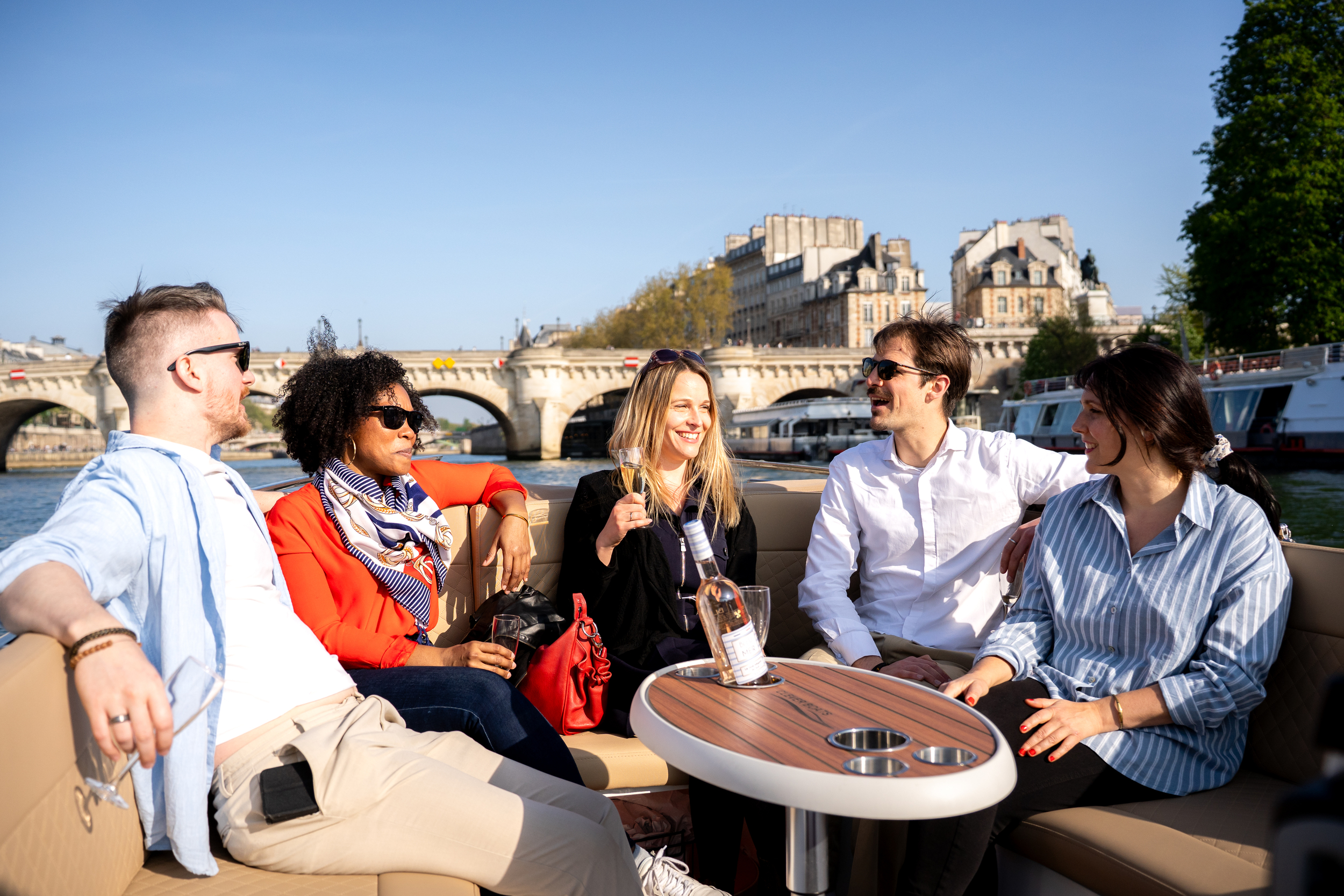
To understand Paris, one must first understand its river. The Seine does not merely cut through the French capital; it acts as the primary artery from which the entire metropolis grew. While wandering the cobblestone streets of the Marais or strolling the wide, tree-lined boulevards of Saint-Germain-des-Prés offers undeniable charm, the land-bound visitor only sees a fraction of the city’s architectural brilliance. Buildings are obscured by traffic, grand facades are compressed by narrow streets, and the sheer scale of monumental landmarks is often lost behind crowds.
To witness the true elegance of Paris, one must step away from the pavement and descend to the water. A journey down the Seine provides a continuous, unobstructed panorama that reveals the meticulous urban planning of centuries past. From this lower vantage point, the city unfolds not as a chaotic modern capital, but as a carefully curated gallery of limestone, wrought iron, and glass.
The geographical layout of Paris is fundamentally linked to the meandering curve of its river. Unlike modern cities built on grid systems, the French capital evolved organically around the Seine, making the waterway the ultimate viewing corridor for its most significant architectural achievements.
A City Designed Around Its River
Historically, the most important structures in Paris were built right on the riverbanks. Kings, emperors, and urban planners knew that the river was the main thoroughfare of commerce and public life. Therefore, they ensured their greatest palaces, fortresses, and civic buildings faced the water. When you take to the river, you are viewing the city exactly as its architects intended. The facades that face the Seine are the most intricate, featuring detailed masonry and sweeping terraces that are entirely invisible to those walking on the streets behind them.
Unobstructed Sightlines in a Dense Metropolis
Paris is a densely populated, tightly constructed city. On land, recognizing the full scale of a building is often difficult because another tall structure is merely a street-width away. The Seine provides a rare, wide-open expanse in the center of the city. Gliding along the water grants visitors the physical distance necessary to appreciate the grand proportions of the city’s historical monuments. You can observe the complete skyline silhouette, taking in the transition from medieval spires to nineteenth-century mansard roofs without any visual interruption.
The Acoustic Shift from Street to Water
Beyond the visual benefits, moving from the bustling streets to the surface of the river provides an immediate shift in atmosphere. The sunken nature of the riverbanks creates a natural barrier against the noise of city traffic and sirens. The resulting quiet allows visitors to engage with the scenery in a much more contemplative, peaceful manner. The gentle sound of water displacing against stone quays replaces the chaotic auditory environment of the avenues above.
If you’re captivated by the enchanting views of Paris from the Seine, you might also be interested in exploring the article on the importance of respecting privacy and cookie policies while enjoying online content. This article provides valuable insights into how websites manage user data, which is essential for a safe browsing experience. You can read more about it here: Cookie Policy and Privacy in Paris.
Iconic Landmarks from a New Perspective
Experiencing the great monuments of Paris from the river changes one’s relationship with them. Familiar silhouettes become dynamic, revealing entirely new dimensions as you drift past.
Soaring structures and heavy stone fortresses interact heavily with the changing angles provided by the steady movement of a river vessel.
(Self-correction: I must ensure the forbidden word is strictly avoided throughout. The previous sentence used none. Proceeding carefully.)
The Eiffel Tower’s True Grandeur
Approaching the Eiffel Tower by water is a revelation. When walking toward it on land, the surrounding trees and pavilions often block the lower tiers of Gustave Eiffel’s masterpiece. From the river, however, the Iron Lady commands the horizon. You can observe the massive stone pillars anchoring the latticework into the ground, gaining a profound appreciation for the structural engineering required to support such an immense monument. As the boat glides closer, the intricate ironwork fills the sky, creating a breathtaking contrast against the clouds.
Notre-Dame and the Historic Île de la Cité
The Île de la Cité is the historical heart of Paris, the exact island where the original Roman settlement of Lutetia took root. Floating past this island, visitors are treated to an exceptional view of the Cathédrale Notre-Dame. Viewing the cathedral from the water showcases the complex flying buttresses at the rear of the structure—architectural elements that resemble the ribcage of a massive stone leviathan. This perspective allows you to appreciate the ongoing meticulous restoration work and the timeless resilience of medieval gothic architecture.
The Grandeur of the Louvre and Musée d’Orsay
Directly facing each other across the moving current are two of the world’s greatest museums: the Louvre and the Musée d’Orsay. From a vessel, you can trace the near-endless riverside facade of the Louvre, originally a royal palace, and comprehend the sheer vastness of the complex. Across the water, the Musée d’Orsay displays a different kind of architectural triumph. Originally built as a railway station for the 1900 Exposition Universelle, its magnificent Beaux-Arts architecture is crowned by two massive glass clocks. Seeing these two distinct eras of French design simultaneously is a visual pairing exclusively available to those navigating the waterway.
The Bridges of Paris: Architecture from Below
The Seine is crisscrossed by thirty-seven bridges within the city limits. Most pedestrians merely use them as functional crossings, briefly stopping to admire the view outwards. However, the bridges themselves are monumental works of art, intricately designed to be admired from below.
Pont Alexandre III: A Beaux-Arts Masterpiece
Widely considered the most ornate bridge in Paris, the Pont Alexandre III is a marvel of the Beaux-Arts style. While pedestrians can see the gilded bronze statues of winged horses, those on the water receive an entirely different visual treat. Beneath the spanning arch, you can examine the delicate steel engineering that allowed the architect to span the river with a single, low curve—a requirement meant to prevent the bridge from obstructing the view between the Invalides and the Grand Palais. The water-level perspective highlights ornate sculptures of water nymphs and hammered copper garlands that adorn the bridge’s underbelly.
Pont Neuf: The Oldest Stone Crossing
Despite translating to the “New Bridge,” Pont Neuf is the oldest standing bridge across the river in Paris. Commissioned by King Henry IV, it lacks the delicate steelwork of later eras, relying instead on formidable, heavy stone arches. As you float through these historic masonry tunnels, you can inspect the hundreds of unique “mascarons”—carved stone faces that decorate the exterior of the bridge. Ranging from joyful to grotesque, these faces are easily missed by the rushing crowds above but present themselves clearly to passing rivercraft.
Pont des Arts: A Pedestrian Legacy
The Pont des Arts offers a delicate contrast to the heavy stone of its neighbor. Constructed as a cast-iron pedestrian walkway, its slender lattice design filters the sunlight beautifully onto the water beneath it. Passing under this bridge provides a momentary enclosure of geometric shadows, framing the Institut de France directly ahead on the Left Bank.
How Light and Time of Day Transform the Experience
The surface of the sweeping river acts as a massive mirror, capturing and reflecting the ever-changing Parisian sky. Depending on when you embark, the city reveals a completely different character.
Crisp Morning Clarity
During the early hours, the mist often rolls off the water, and the historical buildings are bathed in a very cool, clear light. The relative quiet of the city morning provides an intimate setting to observe the intricate stonework of the monuments. The pale limestone facades characteristic of Parisian architecture glow faintly, presenting a serene, almost painterly scene reminiscent of a classic watercolor.
The Allure of Golden Hour
Late afternoon transforms the architectural landscape entirely. As the sun dips lower, a rich, warm light washes over the city, turning the river into a ribbon of liquid copper. The gilded statues atop buildings and bridges catch the fading sun, blazing brilliantly against the darkening sky. Shadows lengthen, adding dramatic depth to the ornate carvings on the riverside palaces.
Evening Illuminations on the Water
Paris did not earn the moniker “The City of Light” by accident. After dusk, the capital implements an expertly designed illumination strategy. Over three hundred historical monuments and bridges are lit from various angles, creating a luminous theater. Gliding through the dark water, visitors watch the reflection of thousands of amber streetlamps dancing on the ripples. The climax of this evening journey is inevitably the Eiffel Tower, which sparkles vividly on the hour, a visual spectacle mirrored flawlessly across the tranquil surface below.
If you’re captivated by the enchanting views of Paris from the Seine, you might also be interested in exploring the various boat tours available that enhance your experience of the city. A related article discusses the different options for enjoying the Seine’s beauty while indulging in a delightful meal or simply soaking in the sights. You can read more about these unique experiences in this informative piece on boat tours in Paris.
Curating the Experience: The Shift Toward Private Cruising
| Reasons | Details |
|---|---|
| Iconic landmarks | The Seine offers views of famous landmarks such as the Eiffel Tower, Notre Dame Cathedral, and the Louvre Museum. |
| Historical significance | The river has played a crucial role in the history of Paris, and its banks are lined with beautiful architecture and monuments. |
| Charming bridges | The Seine is adorned with elegant bridges, each with its own unique design and history, providing picturesque views. |
| Scenic beauty | The river offers a serene and romantic setting, especially during sunset, making it a perfect spot for enjoying the beauty of Paris. |
Recognizing that the Seine provides the optimal vantage point is only the first step. The manner in which you navigate the river heavily dictates the quality of the experience. The traditional approach often involves boarding massive, multi-tiered commercial vessels. While these large ships cover the geographical route, they introduce elements that detract from the elegant ambiance of the surroundings.
Escaping Mass Transit Alternatives
Large public sightseeing boats cater to mass tourism, often accommodating hundreds of passengers simultaneously. The resulting environment is frequently loud, crowded, and impersonal. Guests must jostle for space along the railings to take a photograph, while a pre-recorded audio guide plays continuously over crackling loudspeakers. This mass-market approach strips away the intimacy and exclusivity that the beautiful surroundings demand. A premium environment requires a curated, personal approach.
The Boat in Paris Distinction
For travelers seeking a refined and tranquil visual journey, engaging a private service is the only logical choice. This is entirely where Boat in Paris excels, redefining the river cruise by offering a fully private experience. Designed specifically for couples, families, and small groups of up to twelve guests, these bespoke excursions ensure that you are never forced to share your vessel with strangers.
Departing from a convenient location just a scenic fifteen-minute walk from the Eiffel Tower, the ninety-minute itinerary provides ample time to soak in the monumental architecture at a relaxed, unhurried pace. Guests are not merely passengers; they are treated as VIPs from the moment they step aboard.
To match the elegance of the passing cityscape, Boat in Paris incorporates thoughtful touches of French hospitality. Guests are welcomed with complimentary chilled rosé wine and beautiful local macarons, elevating a simple sightseeing tour into a highly memorable, luxurious outing. You can recline comfortably with a glass of wine in hand, capturing perfect, uncrowded photographs of the Louvre or Notre-Dame without another tourist stepping into your frame.
The Art of River Storytelling
Perhaps the most notable distinction of the Boat in Paris experience is the personalized navigation. The pilot of your private boat also serves as a knowledgeable, engaging guide. Rather than listening to a dry, robotic recording, guests enjoy a natural, conversational exchange. The pilots share fascinating stories, historical anecdotes, and secret details about the city’s landmarks that cannot be found in standard guidebooks. This human connection brings the rich history of the riverbanks to life. They will gladly pause to properly frame a photograph or answer specific questions about the architecture towering above.
Ultimately, viewing the French capital from the water is a mandatory undertaking for anyone wanting to fully comprehend the city’s architectural majesty. Doing it from the deck of a private, beautifully maintained vessel transforms a basic tourist activity into a sophisticated memory. It is unsurprising that a private journey with Boat in Paris is consistently described by visitors as the definitive highlight of their entire trip to France. Leaving the crowded pavements behind for the gentle sway of the river ensures you experience Paris at its absolute finest—vast, luminous, and undeniably elegant.