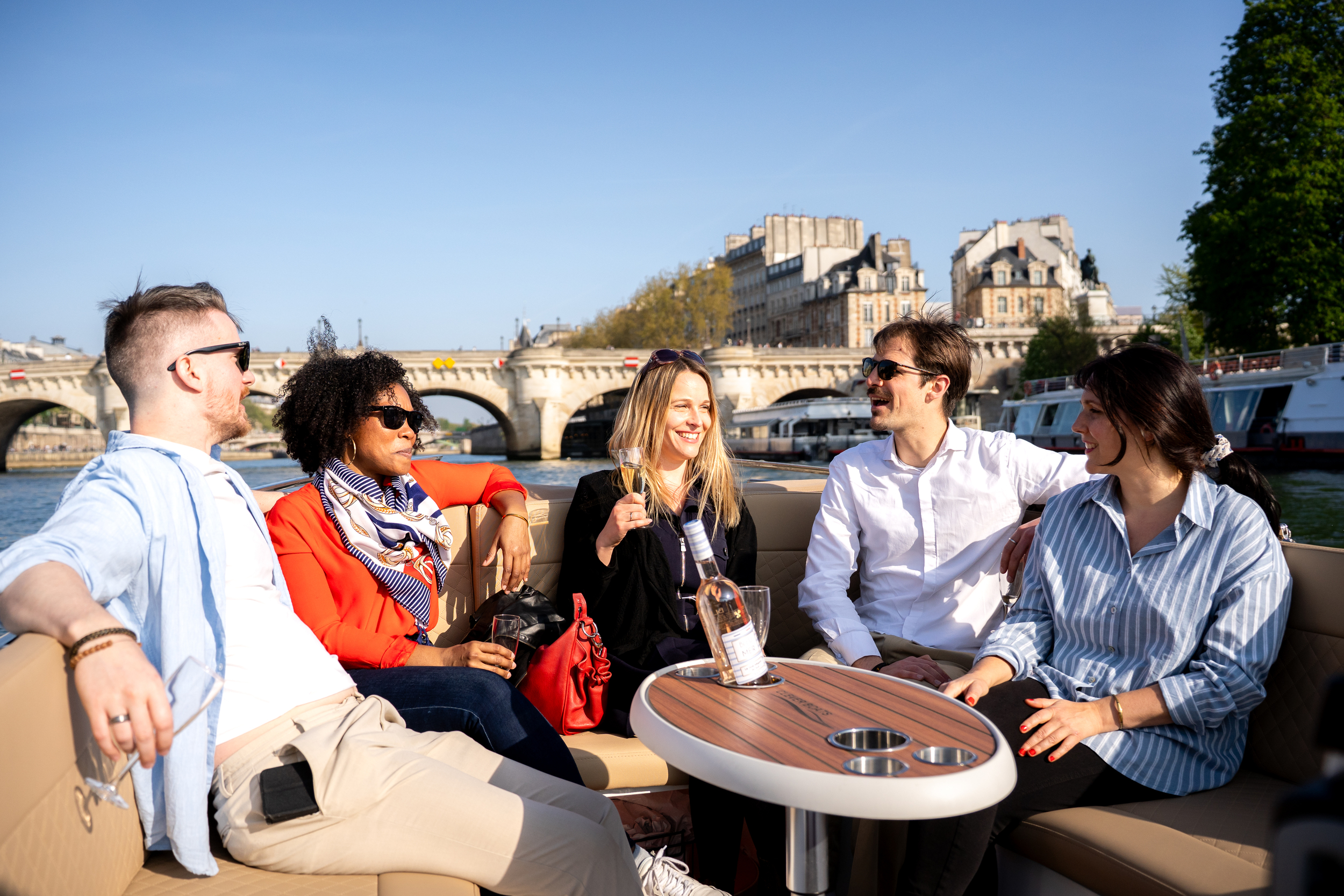
Paris reveals its true character not on the crowded avenues, but from the quiet surface of the Seine. For centuries, this waterway has acted as the central artery of the French capital, shaping its development, trade, and cultural identity. To observe the city from the river is to engage in a visual journey that transcends standard sightseeing. On the water, the chaotic energy of the urban environment softens. The noise of street traffic fades, replaced by the gentle sound of water brushing against the hull of a boat.
From this unique vantage point, the historical timeline of the city unfolds in a seamless panorama, offering a perspective that pedestrians rarely encounter. The banks of the river, recognized as a UNESCO World Heritage site, serve as a living museum. Taking the time to absorb this landscape by boat provides a deeper understanding of Parisian history, culture, and architecture.
Navigating the bends of the river offers a comprehensive education in French architectural history. The buildings that line the quays were designed to project power, prestige, and artistic mastery to anyone arriving by boat.
Observing the Grand Monuments
As a vessel glides along the water, the architectural heritage of Paris presents itself as an uninterrupted sequence of masterpieces. The Louvre Museum, once a heavily fortified royal residence, stretches endlessly along the Right Bank. From the river, guests can trace the evolution of its construction, noting the intricate stonework and the rhythmic placement of its massive windows. The scale of the palace becomes fully apparent only when viewed from a distance, allowing the eye to capture its immense symmetry.
Across the water sits the Musée d’Orsay. Originally built as a railway station for the 1900 Universal Exhibition, its industrial steel skeleton is elegantly masked by an ornate Beaux-Arts limestone facade. Viewing the museum from the water allows passengers to clearly see the giant exterior clocks, which once dictated the departure times of trains and now stand as a testament to the city’s ability to repurpose its industrial past into cultural landmarks. Further down the river, the spires of Notre-Dame Cathedral rise from the Île de la Cité, showing off the intricate flying buttresses that have supported the gothic structure for centuries.
Discovering the Hidden Details of the Riverbanks
Beyond the monumental structures, a river perspective introduces travelers to the subtle textures of the city. The lower quays feature elements invisible from the street level. Ancient cobblestones lead down to the water’s edge, where heavy iron rings remain embedded in the stone—remnants of the era when merchant barges tied up to unload goods such as wine, grain, and timber.
Passengers can observe the traditional houseboats, known as péniches, moored along the banks. Each of these floating homes possesses distinct character, often adorned with potted plants, hanging lights, and small bicycles rusting gracefully on deck. The weeping willows planted along the Île Saint-Louis tip their branches directly into the current, creating small, shaded alcoves that have inspired countless painters over the centuries.
For those captivated by the enchanting sights of Paris as depicted in “A Visual Journey Through Paris by River,” a related article that delves deeper into the experience of exploring the city from its iconic waterways can be found at Boat in Paris. This resource offers insights into various boat tours, highlighting the unique perspectives and hidden gems that can be discovered along the Seine and other rivers, making it an essential read for anyone looking to enhance their Parisian adventure.
Engineering and Elegance: The Historic Bridges of the Seine
Paris is physically tied together by thirty-seven bridges crossing the Seine, and each one tells a specific story about the era in which it was constructed. Passing underneath these structures offers an entirely different appreciation for their design and engineering.
The Ornate Grandeur of Pont Alexandre III
Widely considered the most ornate bridge in the city, Pont Alexandre III was constructed to symbolize the diplomatic relationship between France and Russia at the turn of the twentieth century. From the street, pedestrians admire the tall pillars topped with gilt-bronze statues of Pegasus. However, the view from a boat reveals the structural ingenuity of the crossing.
The bridge consists of a single, massive steel arch, designed specifically to avoid obstructing the river traffic and to preserve the clear sightline between the Invalides on the Left Bank and the Grand Palais on the Right Bank. Navigating beneath it, passengers can look up to see intricate cast-iron decorations, garlands, and nymphs adorning the underside of the structure. The interplay of light and shadow beneath the broad metal span creates a compelling visual contrast against the bright sky.
Pont Neuf and the Rebirth of Île de la Cité
Despite its translated name, the “New Bridge” holds the title of the oldest standing bridge across the river in Paris. Completed in 1607 under the reign of Henri IV, Pont Neuf revolutionized urban planning. It was the first bridge in the city built without houses lining its edges, granting citizens an unobstructed view of the river for the first time in medieval history.
When passing by Pont Neuf on a boat, the most striking features are the mascarons. These are the carved stone faces that decorate the sides of the bridge. There are hundreds of them, each displaying a unique, often comical or grotesque expression. Historians believe they represent ancient courtiers, politicians, and the common citizens of the era. A boat journey brings passengers close enough to examine the weathering of these stones, directly connecting modern travelers to the master stone carvers of the seventeenth century.
The Changing Light of the Parisian Sky
The visual experience of the river shifts dramatically depending on the time of day. The water acts as a massive mirror, capturing the atmospheric changes of the Parisian sky and reflecting them back onto the pale limestone buildings.
Experiencing Morning Tranquility
Embarking upon the water during the earlier hours provides an atmosphere of calm introspection. The morning light in Paris often carries a soft, hazy quality, casting gentle pastel tones across the water. During this time, the river is relatively quiet. The air feels crisp, and the water remains smooth.
Observing the city as it wakes is an authentic experience. Commuters begin to cross the bridges, cafes open their metal shutters along the upper quays, and the general rhythm of the capital slowly establishes itself. For families or small groups seeking a peaceful environment to connect and converse, this early timeframe presents a remarkably clear and quiet version of the city.
The Golden Hour and the Illuminated Iron Lady
As afternoon transitions into evening, the visual tone of the journey changes entirely. The setting sun casts a warm, golden hue that reflects off the windows of the grand palaces and highlights the texture of the stone facades. This period, known to photographers as the golden hour, bathes the entire urban landscape in an elegant, flattering light.
When twilight sets in, the city’s modern lighting systems take over. Streetlamps cast long reflections across the dark surface of the water, and the bridges light up one by one. The defining moment of an evening journey is often the approach to the Eiffel Tower. When the sky grows dark, the tower’s golden lights reflect on the ripples of the Seine. Witnessing the structure burst into its hourly sparkle from the center of the river is a visually striking event that anchors the entire Parisian experience in memory.
Elevating the Experience: The Private Cruise Difference
While large, public riverboats traverse these waters constantly, they often carry hundreds of passengers simultaneously. The crowds, the pre-recorded audio guides playing over loudspeakers, and the competition for a space at the railing can detract from the visual majesty of the surroundings. For those seeking exclusively tailored travel, a private river cruise transforms the journey from a standard tourist activity into a distinct, premium experience.
A Sanctuary Exclusively Yours
Exploring the city with Boat in Paris offers an intimate alternative to the traditional public tours. Their vessels are fully private, meaning the boat is reserved entirely for your specific party. There is never a need to share the deck with strangers. This privacy transforms the deck into a personal sanctuary where guests can move freely, take photographs from any angle, and converse without raising their voices over public address systems.
Designed to accommodate couples, families, and small groups of up to twelve guests, the setting feels both spacious and welcoming. Without the distraction of large crowds, guests can focus entirely on the passing architecture and the company of their fellow travelers. Whether celebrating a milestone anniversary, embarking on a family vacation, or gathering with close friends, the exclusivity of the vessel ensures that the environment matches the significance of the occasion.
Navigating with Guided Local Expertise
A significant advantage of booking with Boat in Paris is the presence of your pilot, who serves a dual role as an expert local guide. Instead of listening to a generic, automated recording, guests engage in real, human conversation. The pilots possess a deep knowledge of the city’s history, architecture, and hidden secrets.
They share engaging stories and specific historical anecdotes about the passing landmarks, adapting their commentary to the interests of the guests onboard. If a group wishes to learn more about the French Revolution, the pilot can point out the Conciergerie where Marie Antoinette was held. If guests are more interested in cinema, the pilot can identify famous filming locations along the quays. This personalized interaction adds a layer of depth to the visual journey, providing context that brings the stone facades to life.
If you’re captivated by the stunning visuals of Paris as seen from the river, you might also enjoy exploring the various options for boat rentals that allow you to experience the city from a unique perspective. For more information on how to navigate the Seine and discover the beauty of Paris from the water, check out this informative article on boat rentals. Whether you’re looking for a romantic evening cruise or a fun day out with friends, the river offers an unforgettable way to see the iconic landmarks of the city.
Charting Your Course with Boat in Paris
| Category | Metrics |
|---|---|
| Number of Photos | 50 |
| Duration | 2 hours |
| Distance Covered | 10 miles |
| Landmarks Captured | Eiffel Tower, Notre Dame Cathedral, Louvre Museum |
Executing a flawless travel itinerary requires partnering with operators who understand the nuances of premium hospitality. Boat in Paris has refined their offering to ensure every logistical detail is handled with care, allowing guests to simply arrive and enjoy the moment.
Meaningful Touches: Rosé and Macarons
A premium visual journey should naturally incorporate the culinary traditions of the region. To complement the passing scenery, Boat in Paris provides complimentary chilled rosé wine and traditional French macarons for the group. The delicate sweetness of a macaron, paired with a crisp glass of wine, enhances the sensory experience of the cruise.
Furthermore, the duration of the journey is intentionally set at ninety minutes. This specific timeframe is an important factor. It provides a generous window to complete a comprehensive loop of the city’s most important landmarks without feeling rushed. Guests have ample time to listen to the pilot’s stories, enjoy a glass of wine, take dozens of photographs, and still have quiet moments to simply sit back and watch the historic city glide past.
Convenient Departures and Timeless Memories
The logistics of embarking on this journey are tailored for ease and comfort. The departure point for Boat in Paris is located just a brief, fifteen-minute walk from the Eiffel Tower. This central location makes it incredibly simple to integrate the cruise into a broader day of exploration in the seventh arrondissement. Guests can spend their afternoon exploring the Champ de Mars or the nearby museums before taking a brief stroll down to the riverbank to meet their private vessel.
Because of this seamless blend of privacy, expert guidance, and thoughtful amenities, this specific river journey is consistently described by travelers as the definitive highlight of their trip to the French capital. Navigating the historic waterways on a private vessel allows you to absorb the authentic rhythm of the city. By choosing this intimate method of transport, travelers guarantee themselves a sophisticated, visually compelling, and highly personal encounter with the heart of Paris.