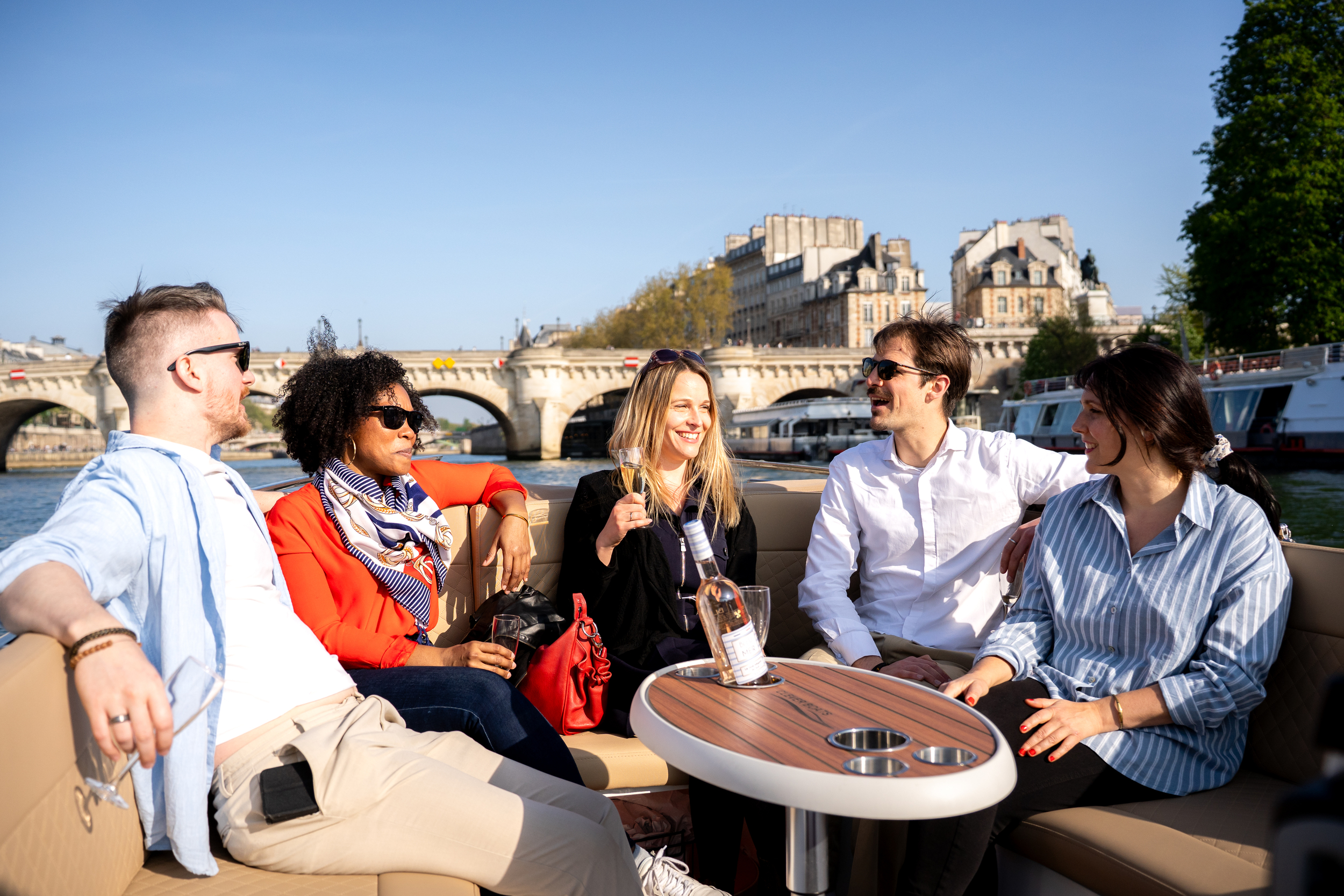
The River Seine functions as the main artery of the French capital, offering a continuous, flowing path through the heart of the city. For centuries, architects, kings, and urban planners designed the most important monuments to face the water. Because of this intentional design, navigating the river provides a comprehensive overview of local history and architecture. Sidewalks and streets often obscure the true scale of these buildings, but viewed from the water, they reveal their proper proportions and historical context.
Choosing to view these landmarks by boat allows visitors to bypass the busy avenues and crowded plazas. Instead of navigating through dense throngs of tourists, passengers find themselves gliding smoothly along a natural viewing corridor. The vantage point from the waterline offers unobstructed sightlines, framing massive stone structures against the sky in a way that ground-level viewing cannot replicate.
While public ferries cross the river regularly, securing a private vessel elevates this viewing opportunity into a memorable, tailored journey. Below is a detailed look at the iconic architecture and monuments that define the shoreline, alongside the distinctly comfortable manner in which you can experience them.
The western portion of the central Seine forms a district defined by grand statements and monumental engineering. As a boat departs from this end of the city, the landscape immediately presents a collection of the capital’s most recognizable shapes.
The Imposing Presence of the Eiffel Tower
Any journey departing near the western edge of the center will inevitably feature the Eiffel Tower. When arriving at a departure point merely a fifteen-minute walk from the tower’s base, the anticipation builds early. From the deck of a boat, Gustave Eiffel’s wrought-iron lattice tower takes on a different dimension. Standing at the shoreline and looking up from the lowest point in the city emphasizes the sheer height of the 1889 structure. The metalwork contrasts sharply with the traditional Hausmannian stone buildings flanking the riverbanks. Observing its illumination during an evening cruise, reflected in the dark water below, leaves a lasting impression on anyone appreciating industrial-era architecture.
The Beaux-Arts Mastery of Pont Alexandre III
Leaving the immediate vicinity of the Eiffel Tower, the river winds toward what many consider the most ornate bridge in the capital. Unveiled for the 1900 Exposition Universelle, Pont Alexandre III spans the river with a single, remarkably flat steel arch. Its design ensures it does not obstruct the view of the Invalides dome in the distance. Approaching it by water grants passengers an intimate look at the gilded bronze sculptures of Pegasus that anchor the four corners. From the deck, you can also inspect the intricate nymphs, water spirits, and Art Nouveau lamps lining the span. Passing directly underneath provides a close view of the bridge’s exposed engineering and the stone keystones that hold the structure firmly in place.
If you’re interested in exploring the stunning sights of Paris from a unique perspective, you might also enjoy reading about the various Parisian landmarks you can discover by boat. This article provides insights into the iconic structures and hidden gems that line the Seine River, making your journey through the City of Light truly unforgettable. For more information, check out the related article here: Paris Landmarks You’ll See by Boat.
The Cultural Corridor: Palaces of Art and History
Continuing eastward, the riverbanks transition into a corridor dedicated to artistic heritage. Here, former palaces and transit hubs have been repurposed into some of the most celebrated museums in existence, directly facing each other across the moving current.
The Musée d’Orsay and its Railway Past
On the Left Bank stands the Musée d’Orsay. Before housing the world’s preeminent collection of Impressionist masterpieces, this stone giant served as a bustling railway station. From the river, its industrial origins remain clearly visible. Cruising past, passengers have a prime view of the two colossal clocks adorning the facade, which once dictated the schedules of steam trains connecting the capital to southwestern France. The building’s grand limestone exterior, stretching widely along the water, acts as a testament to the brief but impactful era of grand railway architecture.
The Louvre Museum’s Endless Facade
Directly opposite the Musée d’Orsay on the Right Bank lies the Louvre. Originally constructed as a fortress in the late twelfth century, it expanded over hundreds of years into a massive royal palace. Viewed from a boat on the Seine, the true, sprawling scale of the Louvre becomes entirely evident. The facade seems to stretch endlessly along the shoreline. Passing by, one can observe the distinct architectural additions made by successive French monarchs. The perspective from the center of the river permits a quiet appreciation of the Renaissance detailing, the sculpted pavilions, and the rigid symmetry that defines classical French architecture, all maintained perfectly at a distance from the heavy foot traffic of the Rue de Rivoli.
The Historic Center: Gliding Past the Ancient Islands
As the river flows deeper into the heart of the city, it splits to surround two natural islands. This area marks the birthplace of the capital, completely steeped in medieval history and Gothic architectural achievements.
Place des Orfèvres and the Conciergerie
Navigating around the Île de la Cité, the dark, conical turrets of the Conciergerie command attention. This formidable structure once served as a medieval royal palace before being converted into a prison. Its most famous inmate, Marie Antoinette, awaited her fate within its thick stone walls. Viewing the Conciergerie from the water highlights its imposing, fortress-like qualities. Passengers can easily spot the Tour de l’Horloge, which houses the oldest public clock in the city. The reflection of these medieval towers in the rippling water below provides a stark contrast to the modern vessels passing by, creating a distinct visual bridge between past and present.
The Enduring Legacy of Notre-Dame Cathedral
Further along the Île de la Cité lies Notre-Dame Cathedral. While recent years have seen extensive restoration efforts following the devastating fire, the cathedral’s majestic silhouette remains a triumphant fixture of the skyline. The waterborne perspective provides an excellent angle to observe the intricate flying buttresses at the eastern apse of the building. These structural supports reach out like the ribs of a great stone ship. Gliding past allows for a serene observation of the ongoing craftsmanship restoring the Gothic masterpiece, emphasizing the enduring nature of human ingenuity and resilience.
The Quiet Dignity of Île Saint-Louis
Immediately adjacent to the bustling Île de la Cité is the smaller, tranquil Île Saint-Louis. Developing in the seventeenth century as a planned residential enclave for the nobility, this island presents a unified, elegant waterfront. From the boat, passengers admire the sheer facades of the perfectly preserved hôtels particuliers (grand townhouses). The balconies, wrought-iron details, and shaded riverbanks generate a quieter, more residential atmosphere. It stands as a peaceful palate cleanser after the heavy historical monuments, demonstrating the architectural restraint and elegance of the French classical period.
The Bridges of Paris: Monuments in Their Own Right
A journey down the Seine is inevitably defined by the structures that cross it. The capital boasts thirty-seven bridges within the city limits, and traversing the river provides an up-close examination of their distinct designs.
Pont Neuf: The Oldest Bridge in the Capital
Despite its name translating to “New Bridge,” Pont Neuf holds the title of the oldest standing bridge across the Seine. King Henry IV ordered its completion in the early seventeenth century. As a boat approaches its white stone arches, passengers can examine the hundreds of unique mascarons—stone masks—carved into the sides of the bridge. Each face presents a different expression, originally intended to ward off evil spirits, or perhaps subtly mock the king’s courtiers. Passing beneath Pont Neuf feels like moving through a gateway in time, anchoring the modern traveler in the deep historical currents of the city.
Pont des Arts: A Pedestrian Haven
Further downstream, the delicate metallic structure of the Pont des Arts comes into view. Connecting the Institut de France to the central square of the Louvre, this pedestrian bridge is recognized worldwide. Free from vehicular traffic, it offers a light, airy visual profile. While the heavy “love locks” that once threatened its structural integrity have been removed, the bridge retains its romantic appeal. Gliding beneath its iron planks affords a unique framing of the Institut de France’s great dome, serving as a reminder of the city’s dedication to intellectual and artistic pursuits.
If you’re planning a trip to Paris, you might want to explore the city’s stunning architecture and rich history from a unique perspective. A related article that offers insights into the best views and experiences is available at Boat in Paris, where you can discover various boat tours that take you past iconic landmarks like the Eiffel Tower and Notre-Dame Cathedral. Enjoying the city from the water not only provides a different angle on these famous sites but also allows you to relax and soak in the ambiance of the Seine River.
The Ultimate Way to Witness the City: Boat in Paris
| Landmark | Description |
|---|---|
| Eiffel Tower | An iconic iron lattice tower located on the Champ de Mars in Paris. |
| Notre-Dame Cathedral | A medieval Catholic cathedral on the Île de la Cité in the fourth arrondissement of Paris. |
| Louvre Museum | The world’s largest art museum and a historic monument in Paris. |
| Musée d’Orsay | A museum in Paris, France, on the Left Bank of the Seine. |
| Grand Palais | A large historic site, exhibition hall and museum complex located at the Champs-Élysées in the 8th arrondissement of Paris. |
While the monuments themselves remain static, the way a traveler chooses to experience them alters the memory entirely. Crowded tour boats with hundreds of passengers and recorded commentary lacking a personal touch often diminish the majesty of the scenery. To truly grasp the elegance of the cityscape, the environment must match the surroundings. This is where Boat in Paris completely transforms the standard river journey.
Exclusivity on the Water
Boat in Paris provides a fleet of vessels dedicated entirely to private experiences. When you step aboard, the boat belongs exclusively to your party. There is never any sharing with strangers. Whether you are seeking a quiet romantic evening as a couple, organizing a memorable outing for a family, or gathering a small group of friends (up to twelve guests), the space adapts entirely to your needs. This exclusivity removes the pressure to secure a good seat or talk over the din of a large crowd. The focus remains completely on the shoreline, the gentle movement of the vessel, and the company of your chosen guests.
Curated Details for an Immersive Journey
The standard cruise stretches for a leisurely ninety minutes, providing ample time to travel past the central monuments without feeling rushed. Every detail of the environment is designed for comfort and quiet luxury. A short walk of approximately fifteen minutes from the Eiffel Tower brings you directly to the departure point, keeping logistics seamless.
To complement the visual feast of the architecture, Boat in Paris enhances the sensory experience with carefully chosen local flavors. Guests are offered complimentary glasses of chilled rosé wine and traditional French macarons. Sipping a crisp wine and tasting a sweet, delicate pastry while the Louvre drifts past elevates the journey from a simple sightseeing tour into a deeply immersive cultural moment.
Guided by Local Expertise
Perhaps the most valuable element of the Boat in Paris experience is the human connection. The individual piloting the boat is not merely a driver, but a highly knowledgeable local guide. Free from the constraints of a pre-recorded audio loop, the pilot shares engaging stories, historical anecdotes, and secret details about the passing monuments. Because the environment is entirely private, the commentary evolves naturally into a conversation. Guests can ask questions about the architecture of the Conciergerie, the engineering of the Eiffel Tower, or the history of the Seine itself.
This combination of total privacy, thoughtful culinary touches, and warm, knowledgeable guidance consistently leads guests to report that their time on the water was the absolute highlight of their visit to the capital. Escaping the crowds to view the magnificent stone facades of the city from a private deck offers a perspective that lingers long after the boat returns to the dock. Engaging with the heart of the capital through a bespoke journey guarantees that the distinct beauty of the river leaves a permanent, beautiful mark on your travel memories.