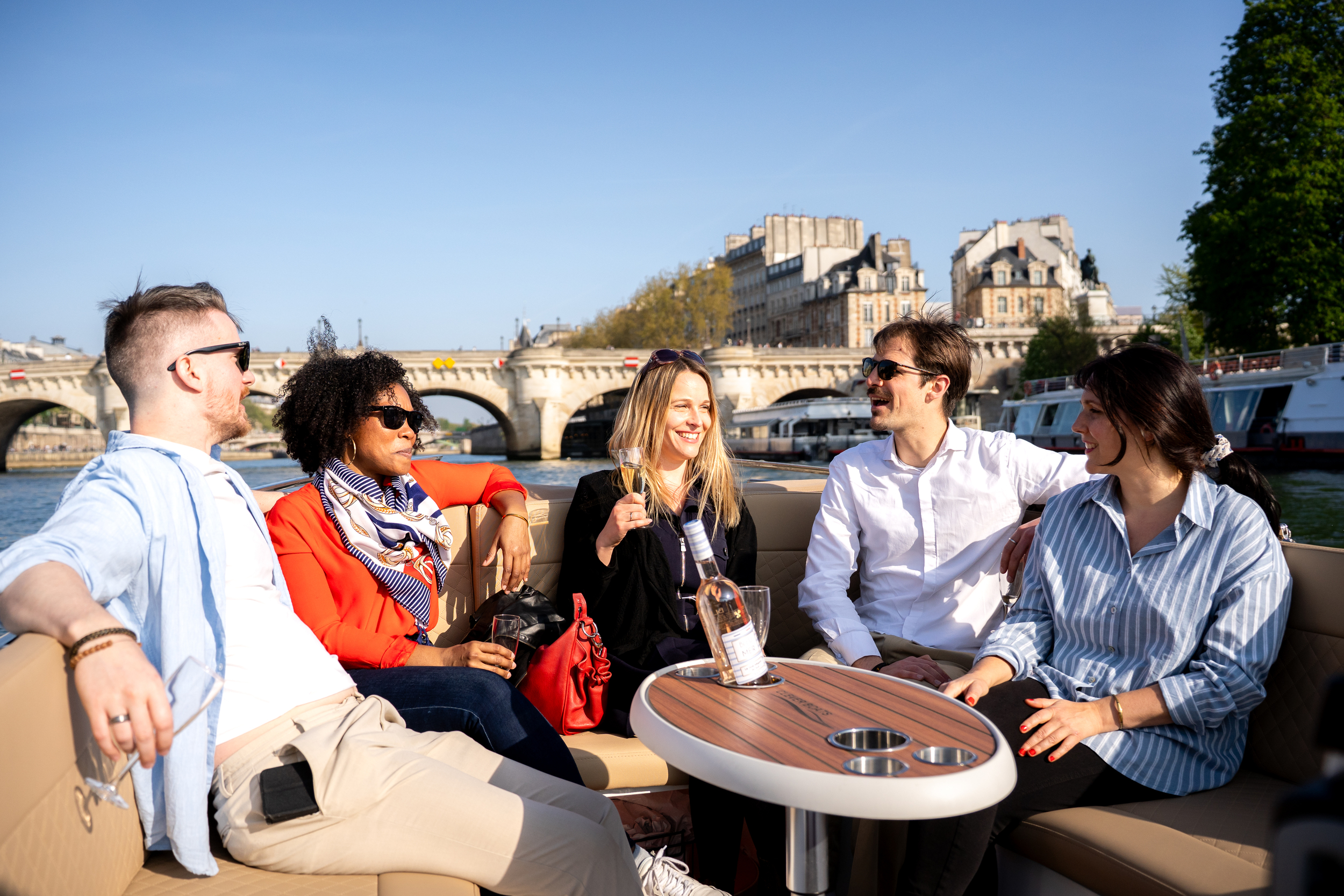
Capturing the visual essence of the French capital often begins along the banks of its defining waterway. The Seine River shapes the geography of the city, acting as a dynamic mirror to its striking architecture and historic monuments. For a photographer, this winding thoroughfare provides an endless array of visual opportunities. Lighting shifts continuously throughout the afternoon, bridging shadows stretch across the current, and intricate stone facades reflect gently in the rolling ripples.
Whether utilizing a professional DSLR system or a highly capable smartphone camera, understanding how to approach this environment remains essential for producing compelling images. Advancing beyond standard tourist snapshots requires a deliberate focus on timing, equipment, and perspective. Naturally, the most distinct photographs originate directly from the water itself, offering an unobstructed vantage point completely removed from the heavily traversed pedestrian paths.
Understanding the Shift in Natural Illumination
Timing dictates the outcome of any photographic endeavor, particularly when moving water acts as a primary element in the frame. The Seine runs directly through the center of the capital, flanked by tall masonry buildings and deeply arched stone bridges that cast very complex shadows. Arriving during the golden hour provides a warm, directional light that highlights the rugged texture of the limestone retaining walls. The river then acts as a massive reflector, bouncing ambient light into shadowed alcoves along the historic quays.
Alternatively, the blue hour presents an entirely different atmospheric mood. As the municipal streetlamps ignite across the embankments, a stark color contrast emerges between the cool, deep blue of the evening sky and the warm, tungsten glow of the city lights reflecting across the dark surface. Managing these specific timeframes requires careful planning, as the lighting ratios change rapidly within mere minutes, requiring constant adjustment of exposure settings.
Utilizing Architectural Symmetry and Leading Lines
Urban photography thrives on structural geometry. The river is characterized by a series of meticulously engineered crossings, each offering a unique geometric pattern. A photographer can utilize the leading lines created by these spans to draw the viewer’s eye toward a central subject, such as a distant church spire or an approaching vessel. When the water yields a relatively calm surface, capturing a perfectly symmetrical reflection of a bridge vault creates a deeply satisfying, balanced composition. Furthermore, the sweeping curves of the riverbanks themselves provide organic leading lines that guide the viewer through the frame, adding a definitive sense of depth and scale to the urban landscape.
For those looking to enhance their experience along the Seine River, a great companion article is available at Boatin Paris. This resource provides valuable insights into the best ways to explore the river, including boat tours and scenic spots that are perfect for photography. Whether you’re a seasoned photographer or just starting out, this guide complements “A Photographer’s Guide to the Seine River” by offering practical tips and recommendations for capturing the beauty of Paris from the water.
Essential Equipment for River-Based Photography
Selecting the Most Effective Lenses
Navigating the banks or the surface of the Seine demands a versatile approach to focal lengths. A wide-angle lens, typically in the 16mm to 35mm range, is absolutely necessary for capturing the grand scale of the architecture framing the water. This wider perspective allows a photographer to include dramatic skies, the entirety of a passing bridge, and the surrounding historic buildings in a single exposure.
Conversely, a medium telephoto lens, such as a 70-200mm, proves invaluable for isolating specific details across the distance. Zooming in tightly on the intricate carvings of a bridge pillar, the massive clock face of the Musée d’Orsay, or a candid moment occurring quietly on the opposite bank helps to compress the background and deliberately eliminate distracting elements from your final composition.
Controlling Glare with Polarization
Moving water introduces a significant challenge regarding surface glare. Bright reflections frequently obscure the depth of the river entirely and wash out the natural color saturation of the surrounding environment. Equipping your lenses with high-quality circular polarizing filters effectively mitigates this visual interference. By manually rotating the filter, a photographer can cut directly through the surface reflection, revealing deeper textures in the water, darkening the blue sky, and significantly enhancing the contrast of the clouds passing above the city. This small piece of optical glass fundamentally alters the dynamic range of an image, turning an otherwise flat daytime photograph into a rich, contrast-heavy portrait of the environment.
Stabilization Techniques for Sharp Imagery
Capturing sharp images in the dimming light of the early evening requires careful attention to camera stabilization. While a heavy tripod serves as the traditional solution for long exposures taken from the cobblestone quays, it becomes entirely impractical if you intend to photograph from a moving vessel. In these instances, relying heavily on lenses and camera bodies equipped with advanced optical image stabilization is highly recommended. Adjusting the shutter speed to systematically account for the motion of the water, while briefly leaning against a sturdy railing, ensures crisp focus even as the available lighting conditions deteriorate in the late afternoon.
Iconic Parisian Landmarks Discovered from the Water
Reimagining the Eiffel Tower
The iron lattice of the Eiffel Tower undoubtedly operates as the most recognized structure in the country. To avoid endlessly repeating the exact same composition captured by millions of previous travelers, one must actively seek alternative perspectives. The river provides countless opportunities to frame the tower in completely novel ways. Positioning oneself to capture the monument peeking through the lower archway of the Pont d’Iéna or reflecting gently in the foaming wake of a passing boat introduces a dynamic element to a heavily documented subject. The key technique involves incorporating the immediate environment into the foreground, utilizing the active river as a contextual anchor for the towering structure looming behind it.
The Ornate Details of Pont Alexandre III
Widely regarded as the most visually extravagant crossing in the city, the Pont Alexandre III serves as a mandatory focal point for any visiting visual artist. Extensively decorated with gilded statues, Art Nouveau lamps, and winged horses, this bridge demands a very close inspection. When viewed directly from the water level, the sheer scale of the engineering truly becomes apparent. A photographer can easily isolate the golden statues against an overcast sky or capture the soft, defining glow of the historical lampposts as dusk settles firmly over the capital. The bridge functions not merely as a pedestrian pathway, but as an elaborate sculptural masterpiece suspended dramatically over the current.
The Historic Core of Île de la Cité
The natural islands located in the center of the river represent the ancient, foundational heart of the city. As you navigate closely around the Île de la Cité, the imposing structure of Notre-Dame Cathedral dominates the eastern skyline. Photographing this gothic structure right from the western edge of the island, known locally as the Square du Vert-Galant, allows for a sweeping view framed organically by the weeping willows that line the low bank. The perspective provided from the water emphasizes the defensive nature of the island and provides an exceptionally clear view of the complex flying buttresses actively supporting the heavy cathedral walls.
Navigating the Obstacles of Urban Travel Photography
The Burden of Dense Pedestrian Traffic
Any attempt to set up a thoughtful composition along the primary thoroughfares of the capital inevitably involves managing continuous pedestrian traffic. The popular bridges and stone embankments remain persistently busy throughout the entire year. Finding an isolated, quiet moment to capture a clean architectural shot without individuals walking bluntly through the frame requires immense patience. Furthermore, setting up stationary equipment often results in accidental bumps and immediately disrupted exposures. This chaotic environment severely limits a creative’s ability to focus solely on the artistic process, forcing the photographer into a constant defensive posture so they can protect their delicate gear.
The Limitations of Standard Tourist Vessels
Many travelers assume that simply boarding one of the large, public sightseeing boats will instantly resolve the problem of crowded embankments. Unfortunately, these massive commercial vessels completely introduce a different set of severe photographic obstacles. Packed full with hundreds of loud passengers, they offer zero room to simply maneuver. If you are seated by chance on the incorrect side of the deck, capturing a specific monument completely fails physically. Additionally, the thick glass windows are frequently covered in dried water spots and internal glare, swiftly ruining any chance of achieving a clear image. Even on the open-air upper decks, the persistent, heavy vibration of the massive commercial engines translates directly into the camera body, ensuring blurry images whenever the shutter speed drops for evening light.
For those looking to enhance their experience along the Seine River, a related article offers valuable insights into family outings and group adventures on a boat in Paris. Exploring the river from a different perspective can provide stunning photographic opportunities and a unique way to appreciate the city’s beauty. You can read more about these exciting boat trips in the article found here.
The Ultimate Vantage Point: A Private Cruise Experience
| Location | Distance | Landmarks |
|---|---|---|
| Paris | 0 km | Eiffel Tower, Louvre Museum |
| Giverny | 75 km | Claude Monet’s Garden |
| Rouen | 135 km | Notre-Dame Cathedral |
| Le Havre | 235 km | Le Havre Beach |
Securing Complete Creative Freedom
To genuinely capture the essence of the city directly from the water without the inherent frustrations of mass tourism, securing a private vessel remains the single most logical decision. Booking an experience directly with Boat in Paris guarantees a fully private setting, meaning the vessel is never shared with strangers. This exclusivity fundamentally transforms the overall photographic potential of the excursion. Without violently competing for rail space among tourists, a photographer retains the freedom to move constantly, shifting effortlessly from port to starboard to chase the optimal light and changing angles as the boat swiftly navigates the gentle bends of the river.
An Unhurried Pace Perfect for Natural Portraiture
Beyond architectural and landscape imagery, a private excursion offers an impeccable, highly controlled setting for lifestyle and portrait photography. Accommodating couples, families, and small groups of up to twelve guests, the Boat in Paris experience provides a remarkably intimate atmosphere. The cruise lasts for a generous ninety minutes, allowing ample time for the initial excitement of the departure to completely settle into genuine relaxation. As guests enjoy the complimentary rosé wine and macarons provided graciously on board, their posture naturally softens. This results in incredibly authentic, candid photographs against the deeply moving backdrop of the historic capital. Because the environment feels safe and familiar, the resulting images consistently become the documented highlight of the visitors’ entire trip to Paris.
Real-Time Guidance and Local Expertise
A highly successful photo walk or photo cruise relies heavily on knowing exactly what is approaching around the very next bend. The pilot on a Boat in Paris excursion does not merely steer the pontoon; they serve concurrently as a knowledgeable, personable guide. They possess a deep understanding of the waterway and share engaging historical stories and intimate anecdotes throughout the entire journey. For a photographer, this ongoing narration functions perfectly as a preliminary warning system. Knowing exactly when a particular bridge or famed monument is about to reveal itself allows for the proper adjustment of camera settings and rapid lens changes well in advance of the decisive visual moment.
Seamless Logistics for Greater Focus
A calm mind definitively produces better art. Removing logistical stress and annoying transport delays from the daily itinerary ensures that all creative mental energy remains entirely focused on the camera and the beautiful surroundings. Conveniently, the primary departure point for Boat in Paris is officially located merely a fifteen-minute walk from the Eiffel Tower, making it exceptionally easy to integrate directly into a busy day dedicated to exploring the primary central districts. Stepping cleanly off the bustling Paris streets and directly onto a quiet, private boat creates an immediate sense of focused relief. You are handed a glass of chilled rosé, the engine purrs to life without the harsh, image-ruining vibrations of a commercial ferry, and the greatest visual city in Europe begins to gracefully unfold before your waiting lens.